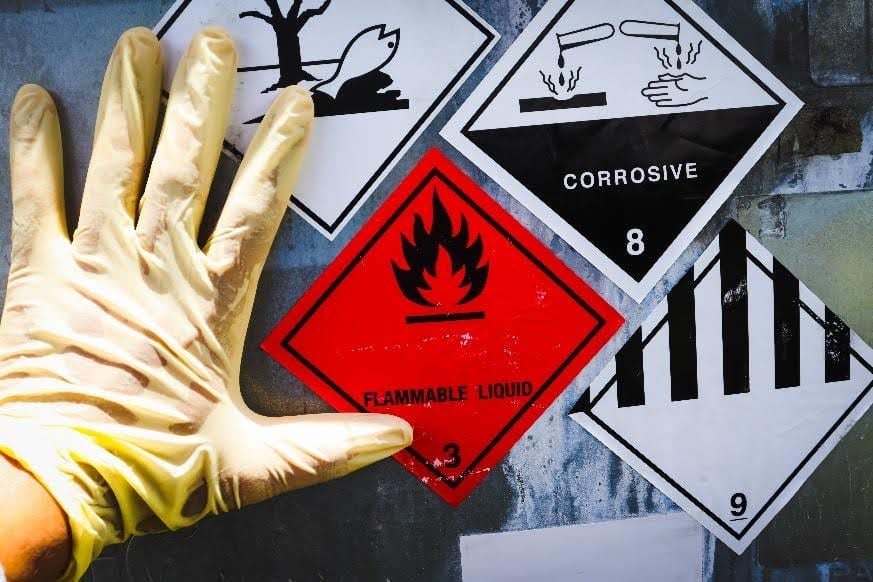
In a controlled environment, a label’s job is simple: identify, inform, and represent a brand. But in harsh industrial environments, labels must do far more. They must endure heat, chemicals, abrasion, UV exposure, moisture, pressure changes, and constant handling. All while remaining legible and securely adhered.
In these demanding conditions, the wrong label material isn’t just a cosmetic issue. It can result in compliance failures, safety hazards, operational inefficiencies, and costly relabeling efforts. Choosing the right label material from the start is critical.
This guide will walk through environmental factors to consider and best practices to ensure long-term label performance.
Why Material Selection Matters More in Industrial Settings
Industrial labels serve essential purposes:
- Safety warnings
- Compliance markings
- Equipment identification
- Asset tracking
- Calibration data
- Hazard communication
- Instructional information
If a label fades, peels, cracks, or becomes unreadable, the consequences can include:
- OSHA violations
- Equipment misuse
- Failed inspections
- Production downtime
- Safety risks
- Warranty disputes
Unlike consumer packaging, industrial labeling must prioritize durability over aesthetics. The environment dictates the material — not the other way around.
Evaluate the Environmental Conditions
Before selecting any label material, you must clearly define the environment in which the label will exist. Ask the following:
1. What Temperature Range Will It Face?
- Continuous high heat? (Engine compartments, furnaces, industrial ovens)
- Extreme cold? (Cold storage, refrigerated transport)
- Temperature cycling? (Outdoor equipment exposed to seasonal changes)
Some materials tolerate brief heat spikes but fail under prolonged exposure. Others perform well in freezing conditions but become brittle in heat.
2. Will It Be Outdoors?
Outdoor exposure introduces:
- UV radiation
- Rain and humidity
- Snow and ice
- Wind and airborne debris
- Temperature fluctuations
UV exposure alone can quickly fade inks and degrade low-grade materials.
3. Is There Chemical Exposure?
Industrial settings often expose labels to:
- Oils and lubricants
- Solvents
- Fuels
- Cleaning agents
- Acids or corrosives
Paper labels fail almost immediately in these conditions. Even some synthetic materials require special coatings or laminates for protection.
4. Is Abrasion a Factor?
Will the label experience:
- Friction from handling?
- Contact with tools?
- Movement along conveyor systems?
- Vibration?
Abrasion resistance becomes critical in high-touch or high-movement environments.
Common Label Materials for Harsh Industrial Use
Let’s break down the most common materials used in demanding industrial settings.
Polyester (PET)
Best for: General industrial durability, moderate to high heat, chemical exposure
Polyester is one of the most widely used synthetic materials in industrial labeling. It offers:
- Strong tear resistance
- Excellent dimensional stability
- Good chemical resistance
- Temperature resistance
It is commonly used for:
- Barcode labels
- Safety warnings
- Electrical panel labeling
Polyester strikes a strong balance between cost and performance, making it a go-to material in manufacturing environments.
Polyimide
Best for: Extreme heat applications
When temperatures exceed polyester’s capabilities, polyimide becomes essential. It can withstand extremely high temperatures.
Common applications include:
- Automotive under-hood parts
- High-temperature industrial processing
Polyimide is ideal when exposure to sustained high heat is unavoidable.
Vinyl
Best for: Outdoor durability and flexibility
Vinyl offers flexibility and strong outdoor performance. It resists:
- UV exposure
- Moisture
- Mild chemical contact
- Abrasion
It works well for:
- Outdoor equipment decals
- Warning labels on machinery
- Construction equipment labeling
Its flexibility makes it suitable for curved or uneven surfaces.
Metalized Materials
Best for: Permanent asset identification
Aluminum labels are used where durability and permanence are required.
Applications include:
- Asset tags
- Equipment plates
- HVAC systems
- Heavy machinery
Metal-based materials provide strong resistance to heat, chemicals, and wear.
Polypropylene
Best for: Moderate durability at lower cost
Polypropylene offers good moisture resistance and flexibility but is less heat-resistant than polyester.
It may be suitable for:
- Indoor industrial labeling
- Secondary equipment marking
- Warehousing applications
It is typically not recommended for extreme heat or chemical-heavy environments.
Adhesive Selection Is Equally Important
Even the strongest label material will fail if paired with the wrong adhesive.
Key Adhesive Types:
- Acrylic Adhesives
- Rubber-Based Adhesives
Choosing adhesive should depend on:
- Surface type (metal, powder-coated, plastic, textured)
- Temperature at time of application
- Long-term exposure conditions
Surface preparation is also critical. Oils, dust, and moisture reduce adhesion performance.
Printing and Ink Considerations
Material durability means little if the print fades.
For harsh environments, consider:
- Resin thermal transfer ribbons (for chemical and heat resistance)
- UV-cured inks
- Protective laminates
- Clear overcoats
Barcodes and compliance data must remain scannable for the life of the equipment. Print permanence is non-negotiable in industrial settings.
Compliance Considerations
Certain industries require certified labeling materials.
Examples include:
- UL / CSA requirements
- OSHA safety labeling requirements
- ANSI safety standards
- Other industry standard/requirements
Using certified materials ensures your labels meet regulatory requirements and pass inspections.
Questions to Ask Your Label Partner
Before placing an order, consider asking:
- What temperature range is this material rated for?
- Is the adhesive compatible with my surface?
- Has this material been tested for UV exposure?
- Does it meet the required industry certifications?
- Should we include a laminate?
- Can we test samples in real-world conditions?
A knowledgeable label partner will guide you through material selection based on your specific environment.
How Whitlam Group Supports Industrial Applications

At Whitlam Group, we specialize in high-performance labeling solutions engineered for demanding environments.
We offer:
- Heat-resistant materials
- UV-resistant solutions
- Chemical-resistant constructions
- Adhesive options
- Compliance-certified options
- Custom sizes and die cuts
- Any many more solutions
We don’t believe in one-size-fits-all labeling. We evaluate your environment, application surface, compliance requirements, and durability expectations before recommending materials.
Because in harsh industrial environments, “good enough” isn’t good enough.
Ready to upgrade your industrial labeling performance? Contact Whitlam Group to request samples or schedule a consultation with our team.